Discovering a unique sound requires moving beyond imitation by cultivating personal obsessions and avoiding lyrical clichés. Learning how to find your songwriting voice involves practicing with creative songwriting ideas and focusing on authentic storytelling that reflects your specific identity as an artist.
Every emerging songwriter encounters the same wall; you finish a demo only to realize it sounds like a pale imitation of your favorite artist. This creative mimicry often feels safe, yet it ultimately prevents you from establishing the sonic thumbprint necessary to cut through today's saturated market. Your voice is not something you invent; it is a synthesis of your influences refined through specific, intentional constraints. In this guide, Voltronix Studios breaks down the transition from imitation to innovation. We will explore the 80/20 rule for creative originality, the rule of three for style synthesis, and the critical role your studio environment plays in capturing authenticity. By the end of this article, you will have a practical framework to stop chasing trends and start defining a sound that is undeniably yours.
The Imitation Trap: Why New Songwriters Sound Like Their Idols
Every emerging artist eventually hits a wall where their demos sound like a diluted version of their favorite records. This feeling of being a copycat dominates songwriting forums, where creators express frustration that their work lacks a distinct fingerprint. At Voltronix Studios, we view imitation not as a failure, but as a necessary, albeit temporary, scaffold. You learn the mechanics of the craft by tracing the lines of your idols; however, a plateau occurs when you stay on the surface.
Sounding like a collection of your influences is a symptom of artistic skimming. It happens when you adopt the aesthetics of a genre without digging into your personal history or regional identity. Learning how to find your songwriting voice requires moving past mimicry into a phase of creative transformation. This is not a passive discovery of a pre-existing talent, but a rigorous process of synthesis.
Through transformative music production, we help artists bridge the gap between who they admire and who they actually are. By moving beyond the imitation trap, you stop focusing on what a song is supposed to sound like and start focusing on the specific, often messy, truths of your own experience. This shift is the foundation of effective creative strategy services for any modern artist looking to make a lasting impact.
Defining the Authentic Voice in Music
To define your voice, you must look beyond the physical qualities of your singing. A songwriting voice is a multidimensional intersection of your lyrical perspective, your harmonic preferences, and your rhythmic pocket. It is the specific way you arrange these elements that creates a signature fingerprint. Many artists struggle with the pressure of being original, fearing that every chord progression has already been played. However, there is a vital distinction between originality and authenticity. Originality is the attempt to do something never done before, which often leads to forced novelty. Authenticity is the act of doing something that only you would do, rooted in your specific history and environment.
Learning how to find your songwriting voice involves cultivating obsessions. This process requires leaning into the specific, niche elements of music and life that fascinate you. For an artist working within the Ottawa arts scene, this might mean blending the stark, industrial mood of the city's winter landscape with the technical precision of jazz harmony or the storytelling traditions of the Ottawa Valley. By integrating these local cultural influences with your technical choices, you create a sound that feels grounded and intentional.
This synthesis is a core component of creative strategy services at Voltronix Studios. It is not about reinventing the wheel; it is about selecting the spokes that reflect your reality. By focusing on your unique pocket and your specific way of seeing the world, you move toward a sound that is difficult for others to replicate. This approach aligns with the principles of transformative music production, where the goal is to amplify the characteristics that make your work unmistakably yours. Much like Hansen's creative journey, your path involves recognizing that your voice is less about what you add and more about the specific way you filter your influences.
The 80,20 Rule for Creative Originality

Transitioning from a general sense of identity into the mechanics of composition requires a structural framework. One of the most effective tools for this is the 80/20 rule for creative originality. This principle suggests that for a song to resonate, roughly 80 percent of the work should lean on established genre conventions and familiar structures. The remaining 20 percent is where you inject the radically unique elements that define your sound. This balance is critical; if a track is 100 percent unique, it often becomes alienating to the listener, but if it is 100 percent familiar, it becomes derivative background noise.
Applying this involves intentional decision-making during the transformative music production process. You might utilize a standard pop chord progression, the 80 percent, but disrupt the listener’s expectation by using an unconventional time signature or an avant-garde synth texture for the remaining 20 percent. Conversely, you could take a universal lyrical theme like grief and anchor it in highly specific, lived-in details that only you could know. By grounding your innovations in a bed of relatability, you master the art of how to find your songwriting voice without losing your audience. This strategic calibration is a hallmark of the creative strategy services we provide at Voltronix Studios, ensuring that your work is both accessible and unmistakably yours.
Using the Rule of 3 to Synthesize Your Style
Synthesizing the 20 percent of originality requires a mechanical framework to prevent creative drift. The Rule of 3 provides a concrete method for this transformation. If you rely on a single influence, you are merely a copyist. Adding a second influence creates a mashup, which often feels like two disparate ideas fighting for space. True synthesis occurs when you blend three distinct, seemingly unrelated pillars. By combining the grit of 90s Grunge, the complex extensions of Jazz Harmony, and the narrative depth of Folk Storytelling, you create a triangle of tension that forces a new sound to emerge.
This triangulation is where you discover how to find your songwriting voice. At Voltronix Studios, our creative strategy services emphasize this deliberate blending. When three distinct aesthetics collide, the listener can no longer easily trace the lineage back to a single source. This process moves beyond basic imitation and into transformative music production, where your style becomes a unique byproduct of your chosen obsessions. By committing to this triad, you ensure your work is authentically and strategically your own.
How to Write Lyrics That Actually Mean Something

While the Rule of 3 establishes your sonic framework, the substance of your work relies on how to write lyrics that actually mean something. Most writers fall into the trap of using placeholder emotions; phrases like "I’m so lonely" or "you broke my heart" are easy to reach for, but they are hollow because they are universal rather than specific. To truly discover how to find your songwriting voice, you must pivot away from generic sentiment and toward the ugly or boring truths of your own life.
We advocate for the Sensory Recall method during our creative strategy services. Instead of attempting to describe a feeling, describe the physical environment that surrounds it. Rather than writing about sadness, write about the specific hum of a faulty radiator in a Sandy Hill apartment or the smell of damp wool after a walk down Elgin Street. Focus on a singular piece of furniture or the way light hits a cluttered desk at three in the morning. These granular details act as anchors for the listener. By grounding your narrative in physical reality, you bypass the clichés that make music feel manufactured.
This approach is a core element of transformative music production. When you write from a place of observed truth, the resulting vocal performance naturally carries more weight and authority. It moves the work from a performance of a song into a communication of a lived experience. Much like Hansen's creative journey involved a commitment to clarity and purpose, your lyrics should serve as a map of your specific world, turning the mundane into something undeniably authentic.
Songwriting Prompts to Force Originality When Stuck
Grounding your lyrics in physical reality provides the foundation, but sometimes the internal critic creates a bottleneck that prevents any output. To bypass this, you must use prompts that act as a mask. By pretending to be someone, or something, else, you lower your creative inhibitions and make choices you would normally avoid. This is a practical application of creative strategy services designed to break habitual patterns.
Use these high-utility prompts to challenge your defaults and discover how to find your songwriting voice through forced limitation:
The Inanimate Observer: Write a song from the perspective of an object in your workspace, such as a worn-out XLR cable or your studio chair. Focus on what it 'hears' that you don't.
The Three-Note Restriction: Compose a full verse and chorus melody using only three distinct notes. This forces you to prioritize rhythmic phrasing and lyrical cadence over melodic gymnastics.
The Anonymous Geography: Describe the sensory experience of a specific Ottawa location, like the intersection of Bank and Somerset, without naming the city or any landmarks. Focus strictly on smells, sounds, and textures.
Reverse Architecture: Write the bridge first, followed by the outro. Do not allow yourself to write a traditional chorus; instead, make the bridge the emotional climax.
Technical Metaphor: Take a specific technical failure, such as a digital feedback loop or a corrupted file, and use it as a literal metaphor for a personal interaction.
Rhythmic Transposition: Record sixty seconds of ambient noise on Elgin Street and transcribe the natural rhythm of the traffic or footsteps into a drum pattern or vocal line.
These constraints require you to make unique decisions rather than following a genre template. This level of intentionality is essential for transformative music production, as it pushes you toward a sound that is structurally yours. Much like Hansen's creative journey, the goal is to use these tools to strip away the expected and reveal the authentic core underneath.
The Role of the Studio Environment in Finding Your Sound

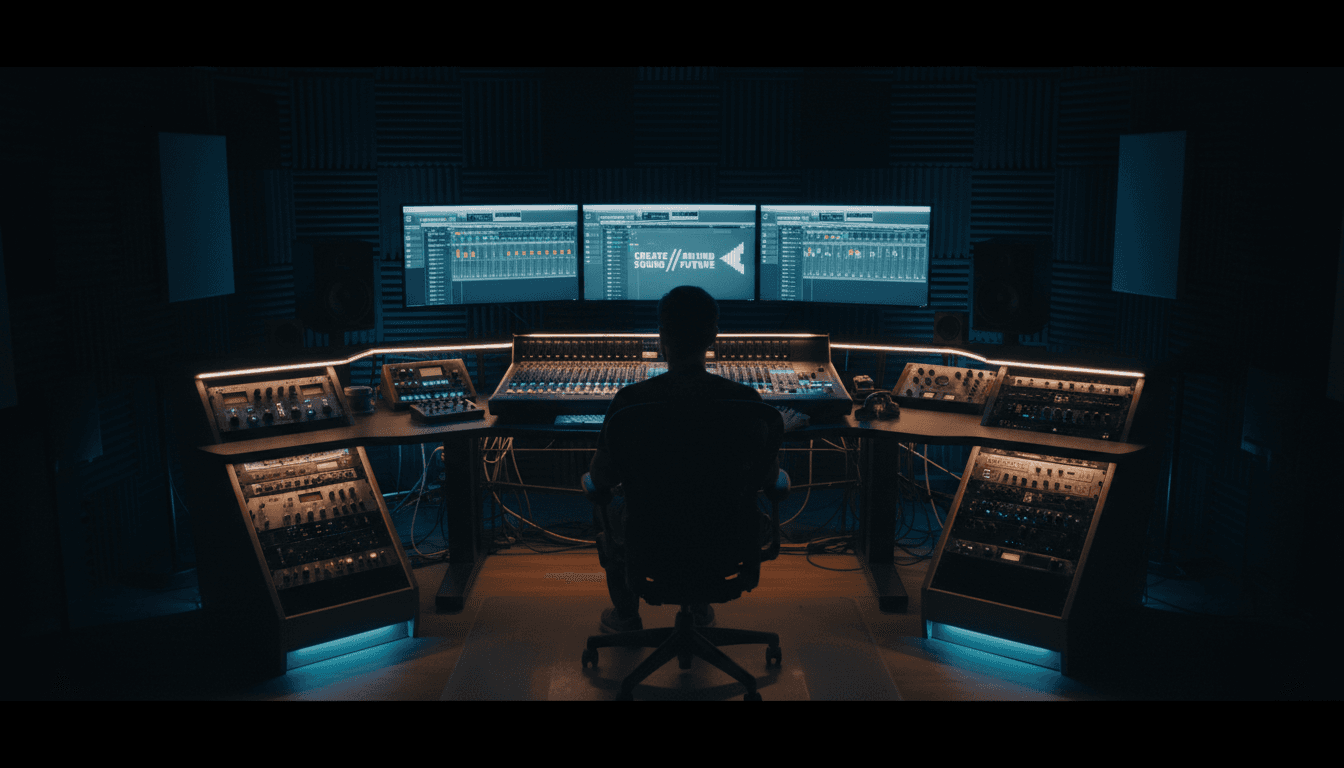
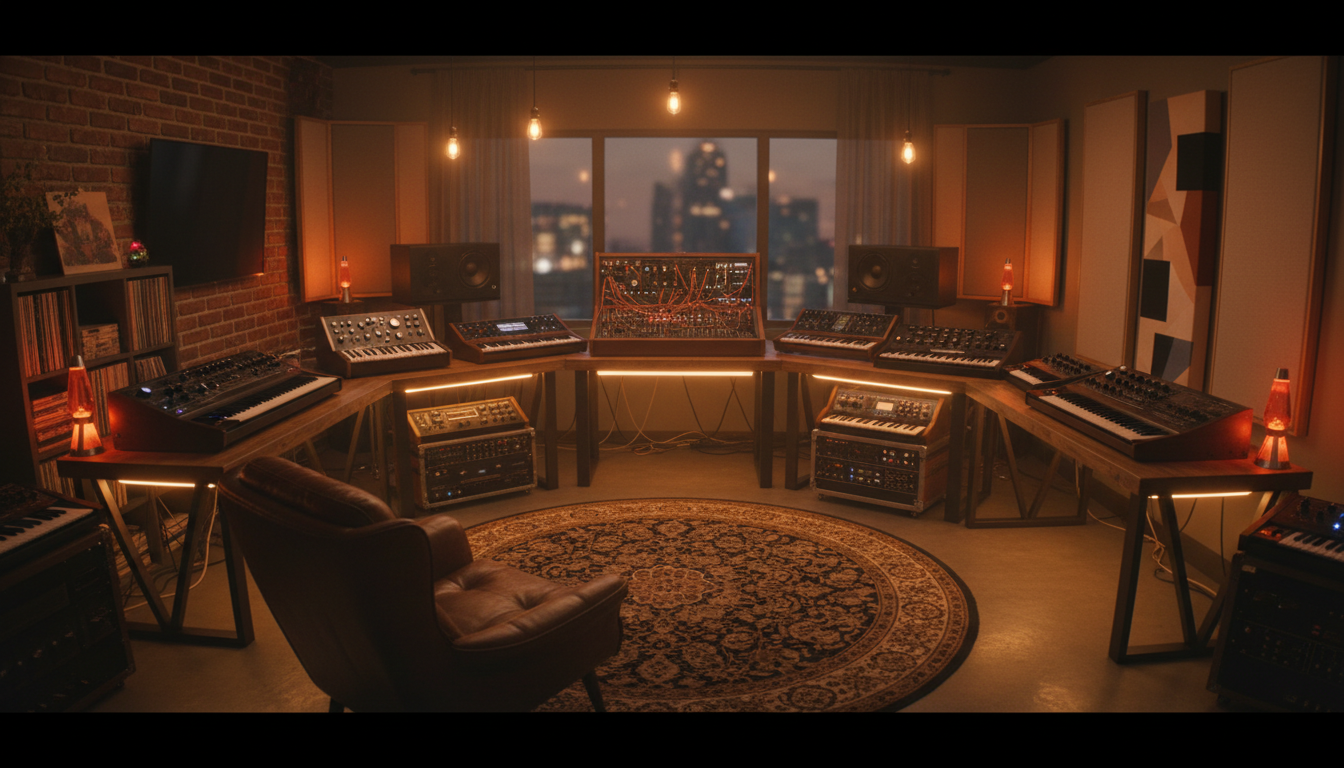
While prompts provide the spark, the physical space where you execute them determines the final texture of your work. Your environment is not a passive backdrop; it is a creative collaborator. The tactile nature of specific gear, such as the unpredictable warmth of analog synths or the intimacy of a vintage ribbon microphone, can pull entirely different performances out of a songwriter. A sterile bedroom setup rarely yields the same emotional weight as a studio designed for atmospheric immersion.
For Ottawa-based artists, stepping outside of a home recording bubble is often the catalyst for a breakthrough. Finding a local creative hub or a creative change agency like Voltronix Studios provides the external perspective necessary to identify your unique strengths. It is difficult to hear your own rhythmic pocket or tonal signature when you are too close to the source. Through transformative music production, we help creators utilize the studio as an instrument, using specific technical environments to refine how to find your songwriting voice. This objective feedback, combined with creative strategy services, allows you to see patterns in your work that were previously invisible. Much like Hansen's creative journey, your sound is shaped by the tension between your internal vision and the external tools you choose to wield.
Daily Habits to Identify and Strengthen Your Voice
Refining a signature sound is a cumulative process, not a sudden revelation. Integrating daily habits into your routine allows you to systematically explore how to find your songwriting voice. Start each morning with ten minutes of Object Writing. Pick a physical item, like a rusted hinge or a half empty coffee cup, and describe it using all five senses. This practice sharpens your ability to pull specific, grounded details into your lyrics, a technique often explored within our creative strategy services.
To dismantle the perfectionism that leads to writer’s block, engage in the Bad Song Challenge. Dedicate twenty minutes to intentionally writing the worst song possible. By removing the pressure of quality, you often stumble upon authentic melodic turns or lyrical risks that your ego would normally censor. This commitment to consistency mirrors Hansen’s creative journey, emphasizing that growth requires a high volume of output. As Miles Davis famously noted, it takes a long time to sound like yourself. Through transformative music production, these daily iterations eventually coalesce into a sound that is both intentional and undeniably yours.